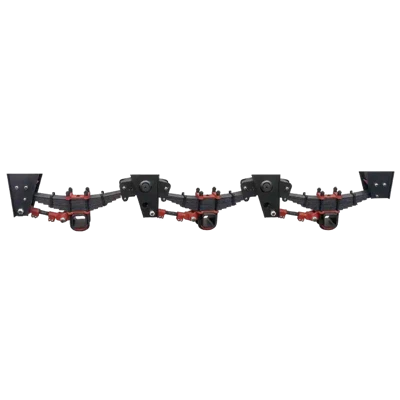
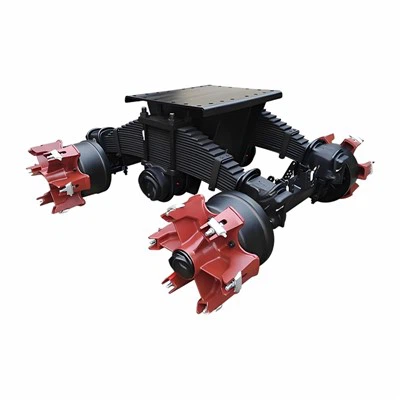
Recent international trade investigations and regulatory updates are sending ripples through the global semi-trailer chassis parts sector, with far-reaching implications for manufacturers and exporters worldwide.
On January 21, 2026, the U.S. Department of Commerce announced the launch of anti-dumping and countervailing duty (AD/CVD) investigations targeting van semi-trailers and their components imported from China, Canada, and Mexico. The probe zeroes in on core chassis parts including frames, panels, and doorframes, falling under HS code 8716.39.0040. Official data reveals that while U.S. imports of finished Chinese semi-trailers stood at a mere $175,000 in 2024, component shipments surged to $260 million, making them the focal point of the investigation. U.S. authorities have alleged dumping margins ranging from 87.57% to 214.61%, with subsidy rates to be determined separately. The U.S. International Trade Commission (ITC) is scheduled to issue a preliminary ruling on industry injury by February 17, 2026. A positive injury determination will propel the investigation forward, potentially leading to steep tariff hikes and escalating export costs for affected enterprises.
Across the Atlantic, the European Union's ongoing vehicle safety and emission regulations continue to reshape industry standards. Since 2025, newly registered semi-trailers in the EU have been required to be equipped with AEBS (Advanced Emergency Braking System) and ESC (Electronic Stability Control) as standard, mandating chassis parts manufacturers to upgrade product designs to accommodate compatible interfaces and mounting positions. Looking ahead, the implementation of the Euro 7 emission standard in 2026 will drive demand for lightweight chassis solutions, such as aluminum alloy frames and composite panels, to enhance fuel efficiency and reduce carbon emissions. Furthermore, the EU's Carbon Border Adjustment Mechanism (CBAM) will extend its coverage to heavy-duty commercial vehicles, including semi-trailer chassis, starting October 2026. Exporters will be obligated to calculate and declare the carbon footprint of their products, adding cost pressures for high-carbon emission components.
In other key markets, the United Kingdom has introduced new certification requirements: starting 2026, semi-trailer chassis must comply with the UKCA (UK Conformity Assessed) marking, replacing the previous CE certification. The UKCA framework encompasses rigorous testing for material strength and braking performance, necessitating manufacturers to update their certification portfolios prior to export. Meanwhile, Southeast Asian nations are emerging as promising growth hubs, with infrastructure and logistics upgrades fueling robust demand for lightweight, high-load-bearing chassis parts. Favorable tariff policies in the region further position it as an attractive alternative market for global exporters.
Industry experts advise manufacturers to prioritize trade compliance by auditing their U.S.-bound component lists, assessing tariff risks, and preparing response materials for the AD/CVD investigations. Proactive expansion into non-U.S. markets such as the EU and Southeast Asia is also recommended to diversify export channels. Technological adaptation is equally critical: investing in R&D for lightweight, AEBS/ESC-compatible parts and establishing carbon footprint accounting systems will be pivotal to meeting evolving regulatory demands. For exporters targeting the UK market, expediting UKCA certification processes is essential to ensure market access without disruption.
As global trade policies and regulatory landscapes evolve at an accelerated pace, the semi-trailer chassis parts industry faces a pivotal period of transformation. Adapting to these changes with agility and foresight will be the key to sustaining competitiveness in the international marketplace.