

Hey there! As a supplier of ABS speed sensors, I'm super stoked to dive into what makes these little gizmos tick. You know, when it comes to vehicle safety, ABS - or Anti - lock Braking System - is a total game - changer, and the speed sensor is like its sharp - eyed detective.
So, what exactly is an ABS speed sensor? Well, you can check out the details here. In a nutshell, it's a crucial part of the ABS setup that measures the wheel speed. Based on this data, the ABS can decide whether a wheel is about to lock up during braking. If it senses that a wheel is slowing down too fast compared to the others, the system kicks in and modulates the brake pressure. This way, you can avoid skidding and maintain better control of your vehicle.
Now, let's get into the construction. There are mainly two types of ABS speed sensors: the magnetic inductive type and the Hall effect type.
Magnetic Inductive ABS Speed Sensor
The magnetic inductive speed sensor is like the old - school hero of the ABS world. It's been around for a while and has a pretty straightforward construction.
Magnet and Coil
At the heart of it, there's a permanent magnet surrounded by a coil of wire. This setup is placed very close to a toothed reluctor ring, which is attached to the wheel hub or the axle. You can think of the reluctor ring as a gear with evenly spaced teeth.
As the wheel starts spinning, the teeth of the reluctor ring pass by the magnetic field created by the permanent magnet. When a tooth approaches the sensor, it distorts the magnetic field in its vicinity. This change in the magnetic field induces an electric current in the coil of wire, according to Faraday's law of electromagnetic induction. The frequency of the current generated is directly proportional to the speed of the wheel.
Signal Output
The electric current generated in the coil is then sent to the ABS control module as a signal. The control module analyzes this signal to determine the rotational speed of the wheel. The beauty of this type of sensor is its simplicity. It doesn't need an external power source to generate the signal because it relies on the changing magnetic field to produce the current.
However, magnetic inductive sensors do have a few drawbacks. They're not very good at detecting low - speed wheel rotation accurately. When the wheel is turning slowly, the change in the magnetic field is very small, and the induced current might be too weak to be detected properly. Also, they can be affected by dirt and debris around the sensor area, which can interfere with the magnetic field.
Hall Effect ABS Speed Sensor
The Hall effect speed sensor is a more modern alternative. It brings a bunch of improvements to the table.
Hall Element
The key component here is the Hall element, which is a semiconductor device. It's placed in a magnetic field produced by a permanent magnet. The Hall element is sensitive to changes in the magnetic field caused by the passing teeth of the reluctor ring, just like in the magnetic inductive sensor.
When the teeth of the reluctor ring pass by the sensor, they cause changes in the magnetic field acting on the Hall element. According to the Hall effect principle, when a current - carrying conductor (in this case, the Hall element) is placed in a magnetic field, a voltage difference is created perpendicular to both the current flow and the magnetic field direction.
Signal Processing
The voltage difference generated by the Hall element is very small, so it needs to be amplified by a signal - conditioning circuit. This circuit not only amplifies the signal but also converts it into a digital signal that can be easily understood by the ABS control module.
One of the major advantages of Hall effect sensors is their ability to detect wheel speed accurately even at low speeds. They're also less affected by external factors like dirt and temperature variations compared to magnetic inductive sensors. However, they do need an external power source to operate the signal - conditioning circuit.
Importance of ABS Speed Sensor in Auto Parts Ecosystem
In the vast world of auto parts, ABS speed sensors play a mission - critical role. Just like shoe repair kits are essential for keeping your footwear in good shape, ABS speed sensors are vital for maintaining the safety of your vehicle.
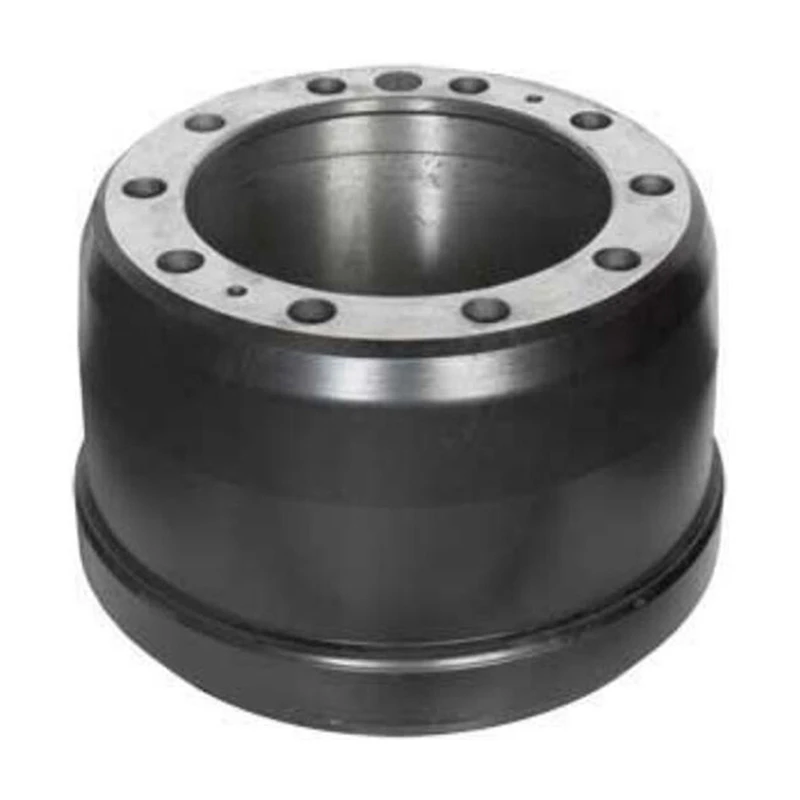
Let's talk about the braking system as a whole. The brake drum is an important part of it, working in tandem with the brake shoes to slow down the vehicle. However, without the input from the ABS speed sensors, the ABS system couldn't function properly. In a high - speed emergency braking situation, the ABS speed sensor ensures that the brake pressure is adjusted precisely to prevent wheel lock - up. This not only helps you stop the vehicle more safely but also reduces the wear and tear on brake components like the brake drum and shoes.
Quality Assurance in ABS Speed Sensor Manufacturing
As a supplier, we take quality very seriously. We understand that a faulty ABS speed sensor can put lives at risk. That's why we have a rigorous quality control process in place.
Material Selection
We start by carefully choosing the materials for our sensors. For the magnetic inductive sensors, we use high - quality permanent magnets that can maintain a stable magnetic field over time. The coils are made of fine - gauge copper wire with excellent electrical conductivity to ensure a strong and reliable signal. In the case of Hall effect sensors, we select top - notch semiconductor materials for the Hall element and build a robust signal - conditioning circuit using high - performance components.
Testing
Every single sensor that comes off our production line goes through a series of tests. We test for electrical performance, such as the accuracy of the signal output at different wheel speeds. We also test the sensors for durability. They're subjected to high - temperature and low - temperature environments to simulate real - world driving conditions. Vibration tests are conducted to make sure they can withstand the jolts and bumps of the road.
Why Choose Us as Your ABS Speed Sensor Supplier
If you're in the market for ABS speed sensors, there are a few reasons why you should consider us.

Reliability
Our sensors are built to last. With our strict quality control and high - quality materials, you can count on our sensors to perform consistently and accurately. Whether you're a car manufacturer looking for a reliable component supplier or a repair shop in need of quality replacement parts, our sensors won't let you down.
Technical Support
We don't just sell you a product and leave you hanging. Our team of experts is always on hand to provide technical support. If you have any questions about installation, troubleshooting, or compatibility, we're just a call or an email away.
Competitive Pricing
We understand that cost is a factor for many of our customers. That's why we strive to offer our high - quality sensors at competitive prices. We believe in delivering value for money, so you get a top - notch product without breaking the bank.
Contact Us for Your ABS Speed Sensor Needs
So, if you're interested in purchasing ABS speed sensors, or if you have any questions or need more information, don't hesitate to reach out. We're eager to work with you and help you find the right solution for your requirements. Let's start a conversation and see how we can take your vehicle safety to the next level.
References
- Smith, J. "Automotive Electrical Systems 101." Auto Tech Press, 2018.
- Johnson, M. "ABS Technology: A Comprehensive Guide." Motorway Publishers, 2020.
- Brown, K. "The Future of Vehicle Safety Systems." Roadway Insights, 2021.


