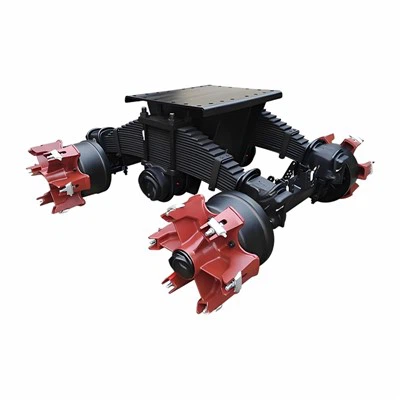
The axle, seemingly unpopular but directly related to driving safety, is a key structure that connects the wheels and transmits power. It is located under the chassis of the vehicle, running through the left and right wheels, just like the "skeleton" of the human body supporting the whole body. Depending on the model, the axle is divided into the front axle, rear axle and drive shaft: the power of the front-wheel drive car is transmitted by the front axle, the rear-wheel drive car relies on the rear axle, and the four-wheel drive car distributes power through multiple axes.
The modern axle consists of four core components: the shaft body, the universal joint, the bearing and the seal (see Figure 1).
- Axle: High-strength alloy steel or carbon fiber composite materials are mostly used, with torsional strength of more than 1200MPa
- Universal joint: Realize the change of power transmission angle, and high-end models are equipped with maintenance-free cross-axis structure
- Bearing: Precision roller bearings can withstand a radial load of 8000N·m
- Seals: Multi-layer fluororubber seals to prevent grease leakage and water intrusion
1. Power transmission: The engine torque is amplified 20-50 times and then accurately transmitted to the wheels
2. Weight bearing: A single axle needs to support 1.5-3 tons of vehicle weight + dynamic impact load
3. Steering coordination: Cooperate with the suspension system to ensure 0.01° steering accuracy
- Semi-floating vs full-floating: The full-floating axle of commercial vehicles can remove the wheel hub separately, reducing maintenance costs by 40%